
Physical Poker Tables at Poker Refuge Torquay
The Poker Table
A table built for face-to-face poker. The poker tables at Poker Refuge Torquay are designed for one thing: offline poker played in person. Each table is a solid, low-slung piece of furniture that anchors the room and invites players to lean in.
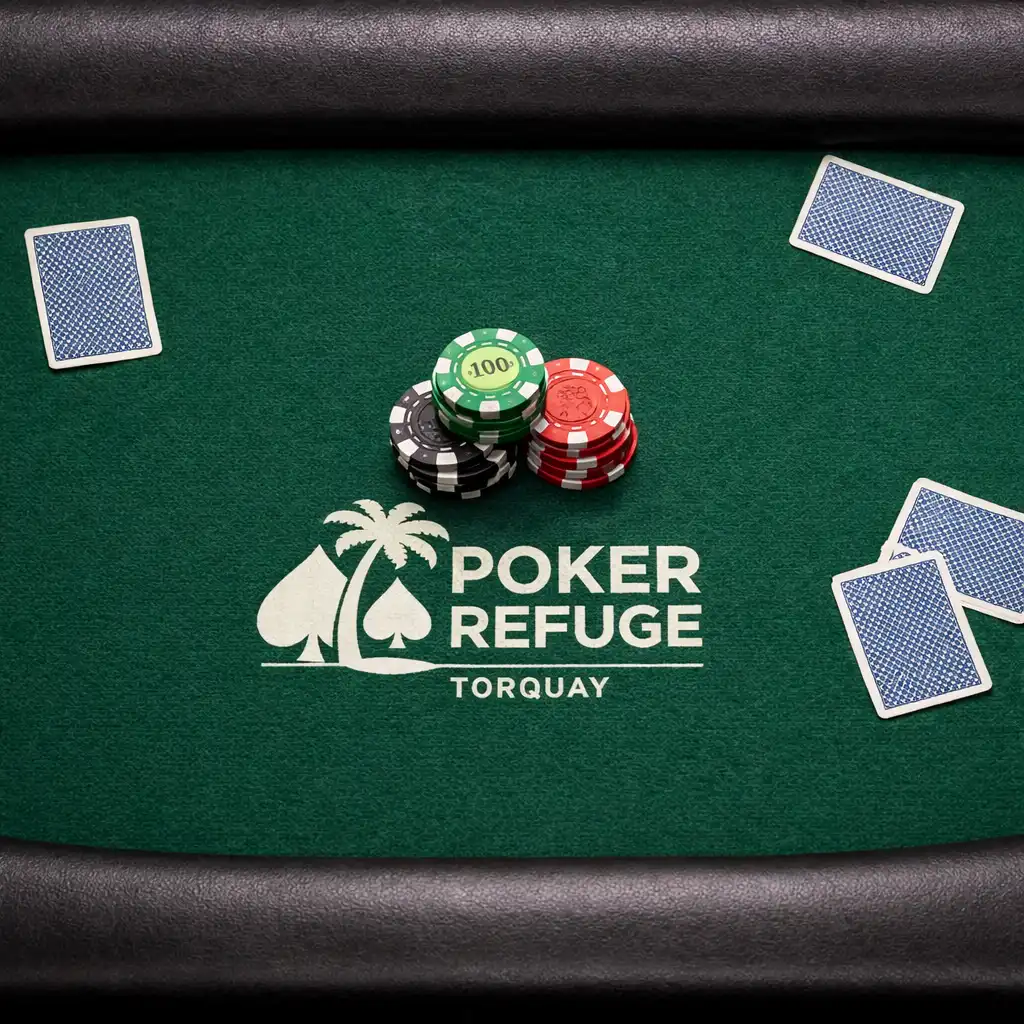
- The table surface is covered in deep forest felt, chosen for its tactile quality and the way it holds cards and chips without glare.
- A raised rail runs around the edge, giving players a comfortable place to rest their arms during long poker sessions.
- The table's weight and low profile make it feel permanent, not like a folding card table.
The felt is the most important part of the poker table. It is smooth but not slippery, giving cards just enough resistance to stay put while still being easy to slide across the table. The felt is a deep forest green that reduces eye strain during long sessions, stretched tightly over the table surface to prevent wrinkles or bubbles. The texture is consistent across every table, so players always know what to expect.
Around the felt is a padded rail that runs the full perimeter of the table. It is upholstered in a durable material that can withstand hours of use and gives players a comfortable place to rest their forearms. The rail is slightly raised above the felt, creating a natural boundary for the playing surface. The padding is firm but forgiving, so players can lean forward without discomfort. The rail's stitching is clean and even, reinforcing the table's crafted quality.
Whether you are playing in a dedicated poker room or a private poker session, the tables at Poker Refuge Torquay are set up to support the game. They are sized to accommodate a full ring of players without feeling crowded. Tables are arranged to give players enough elbow room. The height is standard for comfortable seated play. The tables are stable and do not wobble, even during intense moments.
Cards on the Felt
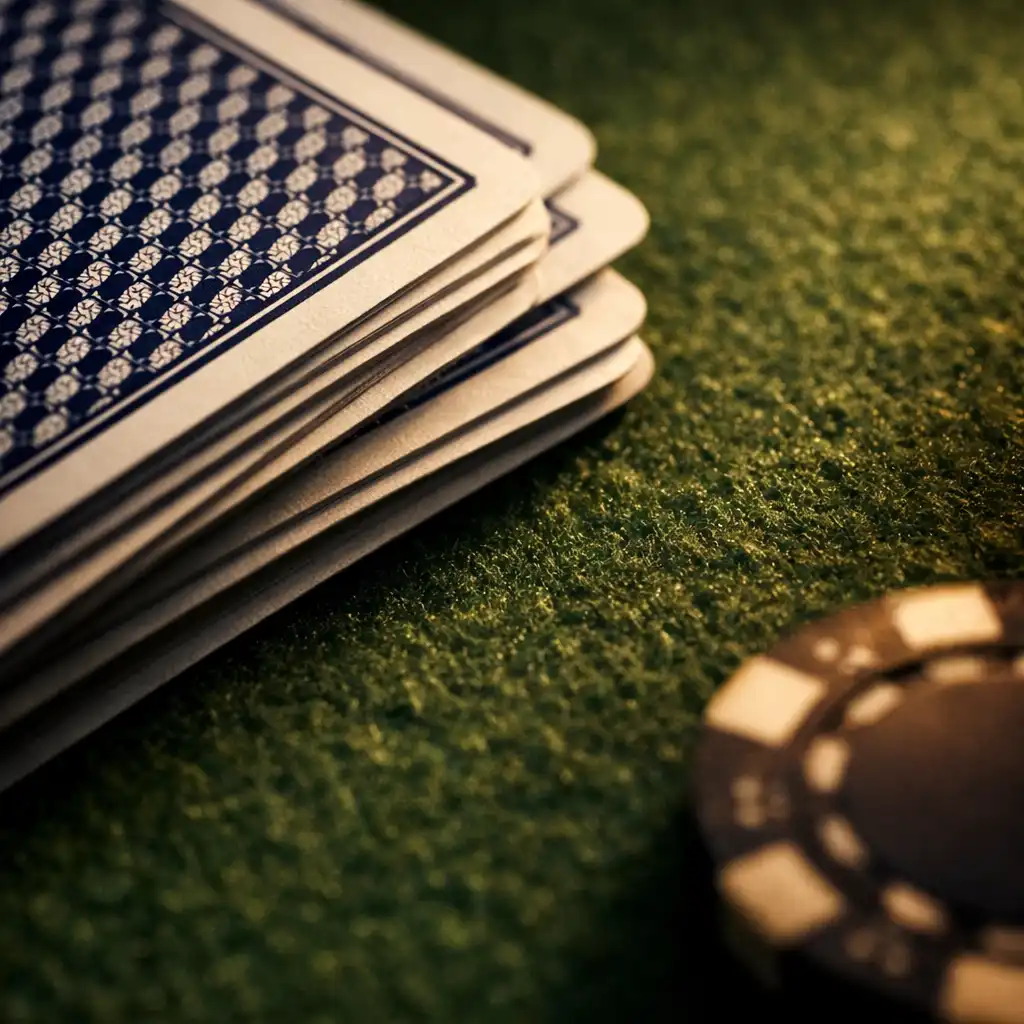
When a card is dealt onto the felt, it makes a soft, distinctive sound. It is a sound that only exists in face-to-face poker, and it is part of the rhythm of the game. The felt absorbs some of the sound, so it is never harsh or distracting. Players learn to read the game partly through these small sounds. The sound is a reminder that this is physical, not digital.
The chips used at Poker Refuge Torquay are solid and weighty. They sit firmly on the felt and do not slide around unless a player moves them deliberately. Chips are designed for physical handling and stacking. The felt's texture helps keep chips in place. Players can feel the weight of each chip in their hand.
From a seated eye level, the cards on the felt are the focus. The pips and numbers are clear, and the edges of the cards catch the light just enough to be readable without glare. The lighting over the table is designed to reduce shadows on the cards. Cards are standard size and easy to read from across the table. The felt's dark colour makes the cards stand out.
In offline poker, the dealer's hand is part of the table's movement. Whether dealing from a shoe or by hand, the motion is deliberate and visible to everyone at the table. The dealer's actions are part of the physical rhythm of the game. Players can see every card as it is dealt. This transparency is a key part of face-to-face poker.
Around the Poker Table
The chairs around the poker table are chosen for long sessions. They are supportive without being stiff, and they allow players to sit comfortably for hours. Chairs are upholstered and have a slight recline. The height is matched to the table so arms rest naturally. Players can adjust their position without disturbing others.
The poker table's oval or rounded shape means that every player has a clear view of the centre and of each other. No one is hidden behind a corner or too far away to see the cards. The shape encourages eye contact and conversation. Players can see the entire felt surface from their seat. The table's curve creates a natural sense of enclosure.
Each player has enough room to manage their cards, chips, and drinks without crowding their neighbours. The spacing is deliberate, so the table feels full but not cramped. There is a clear boundary between each player's area. The rail provides a natural divider. Players can lean back without bumping into the person behind them.
Around the table, the game has a natural rhythm. Cards are dealt, players act in turn, and the focus moves around the circle. It is a physical, shared experience that cannot be replicated online. The turn order is visible and audible. Players can read each other's body language. The pace is set by the players, not by software.
Poker Player Perspective
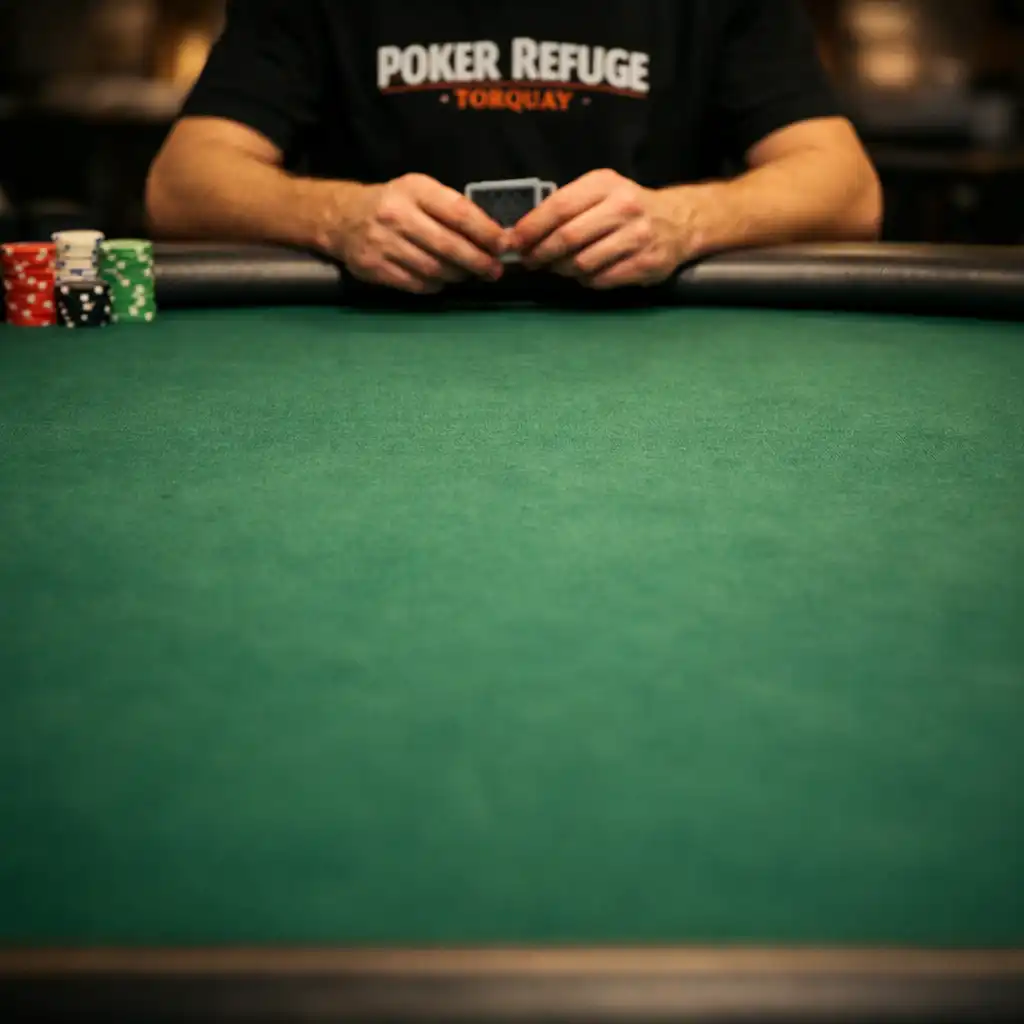
When you sit down, the felt stretches out in front of you, and the other players are arranged around the curve. The lighting is even, so there are no harsh shadows on the cards. The felt appears darker at the edges and lighter in the centre. You can see the entire table without turning your head too far. The rail is at a comfortable height for your arms.
Directly across from you is another poker player. You can see their face, their hands, and the way they handle their cards. This is the essence of face-to-face poker: reading the person, not just the cards. Eye contact is natural and frequent. You can observe their posture and movements. The distance across the table is close enough for conversation.
Beyond the table, the poker room is dim and quiet, with low lighting that keeps the focus on the felt. The walls are a deep green, and the floor is a pale limestone, creating a calm, enclosed atmosphere. The room's acoustics are soft, so conversations do not echo. The lighting is warm but not bright. The overall mood is focused and relaxed.
From your seat, you might catch a glimpse of the card lounge through a narrow slit window. It is a reminder that the poker tables are part of a larger venue designed for offline poker. The card lounge is adjacent to the poker room. The slit windows create a visual connection without distraction. Players can move between the two spaces during breaks.
Poker Tables Inside the Room
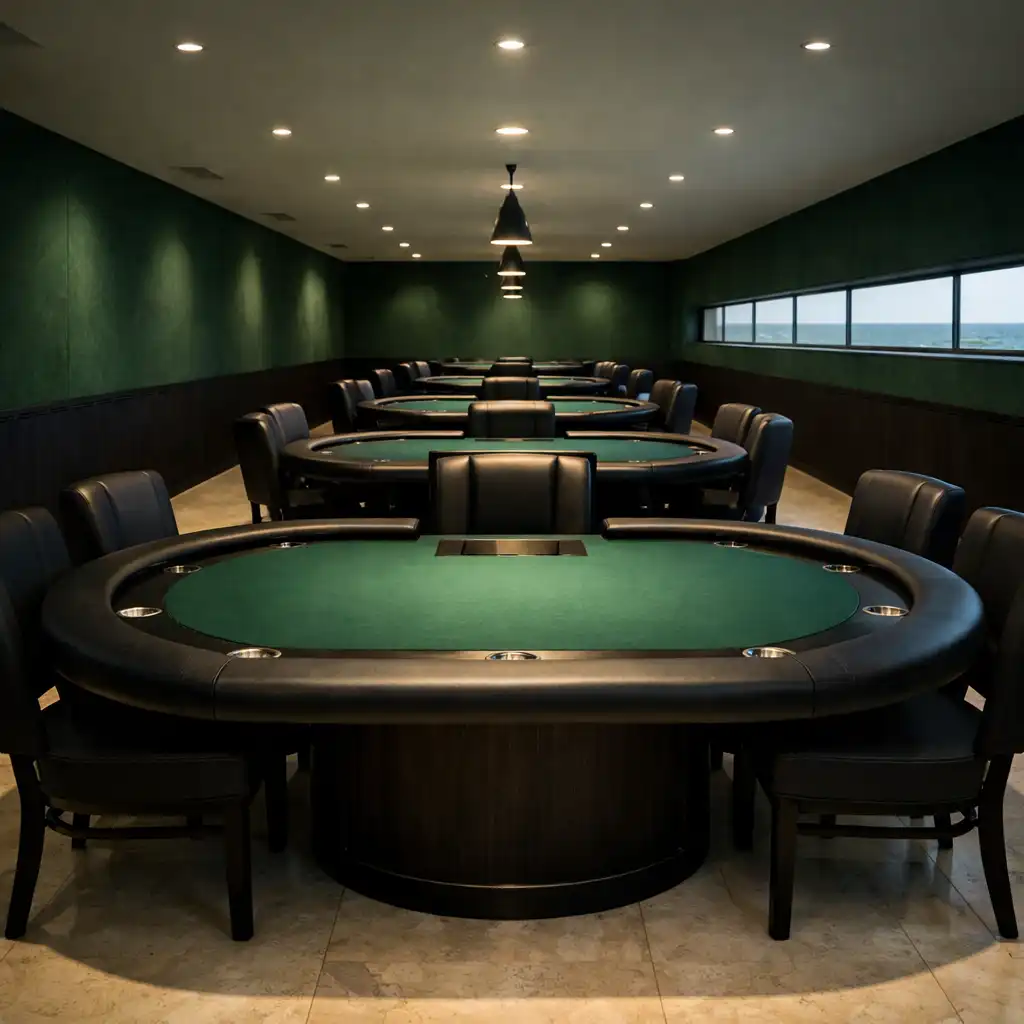
The poker room at Poker Refuge Torquay is designed specifically for offline poker. The tables are arranged to create a sense of order and focus, with enough space between them for players to move comfortably. The room's layout minimises distractions. Tables are positioned to take advantage of the lighting. The overall feel is of a dedicated, purpose-built space.
The walls of the poker room are covered in a deep forest felt, matching the table surfaces. This creates a cohesive, immersive environment where the boundary between table and room blurs. The felt walls absorb sound and reduce echo. The colour is calming and helps players focus. The texture is consistent with the tables.
Underfoot, the floor is a pale limestone that contrasts with the dark walls and tables. It reflects just enough light to keep the room from feeling too heavy. The floor is smooth and easy to walk on. The light colour brightens the space. The contrast with the felt walls is intentional.
Narrow horizontal slit windows run along one wall of the poker room, letting in a sliver of natural light. They are positioned high enough to avoid glare on the tables but low enough to maintain a connection to the outside. The slits are 56-72px tall on desktop. They frame the coastal light without distracting players. The windows reinforce the architectural concept of shelter.
Taken together, the poker tables, felt walls, limestone floor, and slit windows create a space that feels both sheltered and open. It is a room where offline poker can be played seriously and comfortably. The room is designed for long sessions. Every element supports face-to-face play. The atmosphere is calm and focused.